
Book · 2566
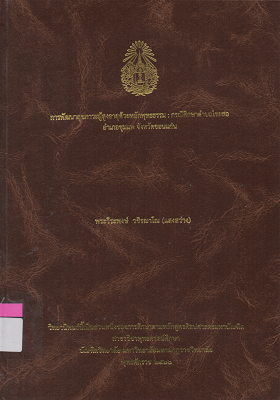
การพัฒนาสุขภาวะผู้สูงอายุด้วยหลักพุทธธรรม : กรณีศึกษา ตำบลไชยสอ อำเภอชุมแพ จังหวัดขอนแก่น = Development of Happiness for Thai Elderly with Buddhist Principles : A Case Study of Chai So Sub-District, Chumphae District, Khon Kaen Province
พระวีระพงษ์ วชิรญาโณ (แสงสว่าง)
1 of 1 copy availableหอสมุดกลาง ชั้น 4 · วท 362.6 ว846ก 2566
Copies in the library
| Location | Call number | Status |
|---|---|---|
| หอสมุดกลาง ชั้น 4 | วท 362.6 ว846ก 2566 | Available |
About this title
- Title
- การพัฒนาสุขภาวะผู้สูงอายุด้วยหลักพุทธธรรม : กรณีศึกษา ตำบลไชยสอ อำเภอชุมแพ จังหวัดขอนแก่น = Development of Happiness for Thai Elderly with Buddhist Principles : A Case Study of Chai So Sub-District, Chumphae District, Khon Kaen Province
- Author
- พระวีระพงษ์ วชิรญาโณ (แสงสว่าง)
- Published
- นครปฐม : มหาวิทยาลัยมหามกุฏราชวิทยาลัย, 2566
- Language
- Thai
- Notes
- การวิจัยนี้ มีวัตถุประสงค์ คือ ๑. เพื่อศึกษาแนวคิด ทฤษฎี การพัฒนาสุขภาวะผู้สูงอายุ ๒. เพื่อศึกษาหลักพุทธธรรมที่เหมาะสมเกี่ยวกับการพัฒนาสุขภาวะผู้สูงอายุ : กรณีศึกษาตำบลไชยสอ อำเภอชุมแพ จังหวัดขอนแก่น ๓. เพื่อวิเคราะห์การพัฒนาสุขภาวะผู้สูงอายุด้วยหลักพุทธธรรม : กรณีศึกษาตำบลไชยสอ อำเภอชุมแพ จังหวัดขอนแก่น เป็นการศึกษาเชิงคุณภาพแบบสัมภาษณ์ผู้ทรงคุณวุฒิจำนวน ๑๖รูป/คนแล้วนำข้อมูลที่ได้มาวิเคราะห์แล้วนำเสนอ ผลการวิจัยพบว่า: ๑. แนวคิดการพัฒนาสุขภาวะผู้สูงอายุ มีดังนี้ (๑) สุขภาวะทางกาย คือ ไม่เป็นโรค มีร่างกายแข็งแรง (๒) สุขภาวะทางจิต คือ มีสุขภาพจิตดีพร้อมในการดำเนินชีวิต (๓) สุขภาวะทางสังคม หมายถึง สุขภาวะที่เกิดจากการอยู่ร่วมกันด้วยดีของกลุ่มคน (๔) สุขภาวะทางปัญญา หมายถึง ความรู้เท่าทันและความเข้าใจอย่างแยกได้ในเหตุผลแห่งความดีความชั่ว ๒. หลักพุทธธรรมที่เหมาะสมกับการพัฒนาสุขภาวะของผู้สูงอายุใช้หลักภาวนา 4 โดยการส่งเสริมให้ผู้สูงอายุบริโภคอาหารในปริมาณที่เหมาะสม พักผ่อนอย่างเพียงพอกับความต้องการของร่างกาย ส่งเสริมให้ผู้สูงอายุฝึกอบรมจิตใจให้เข้มแข็งอดทน และเจริญงอกงามด้วยคุณธรรม รู้เท่าทันสภาวะของโลกและสังขารตามความเป็นจริง ๓.การพัฒนาสุขภาวะของผู้สูงอายุ ใช้หลักภาวนา ๔ มาใช้ส่งเสริมให้ผู้สูงอายุบริโภคอาหารอย่างเพียงพอและถูกสุขลักษณะ และออกกำลังกายตามความเหมาะสมกับวัย ส่งเสริมให้องค์กรทางศาสนา เป็นศูนย์กลางของชุมชนในการจัดงานวันสำคัญต่าง ๆ ที่เกี่ยวเนื่องด้วยสถาบันครอบครัว ให้ความรู้ใหม่ๆ เพื่อประโยชน์ต่อการดำเนินชีวิต The objectives of the research were to study the concepts and theories on the development of the elderly well-being, to study the principles of Buddha-dhamma (The Buddha’s teachings), suitable for enhancement of well-being of the elderly, especially those people dwelling in Chai So subdistrict, Chum Phae district, Khon Kaen province as the case study, and to analyze the development of the elderly well-being, based on Buddha-dhamma. The study was engaged in the qualitative research methodology. The interview was used to collect the qualitative data from sixteen qualified experts, and the content analysis was used to explain and present the given data. The research findings were as follows: 1.The concepts on the development of the elderly well-being consisted of four following issues: 1. The physical well-being meant not having illness and having a good health. 2. The mental well-being indicated a good mental condition to earn a living. 3. The social well-being implied a good association between oneself and other persons. 4. The spiritual well-being signified the literacy and differentiation of good and evil reasons. 2.The Four Types of Cultivation or Development (Bhavana in Pali) were suitable for strengthening the well-being of the elderly. Based on those principles, the elderly were encouraged to have food in moderation, to have adequate rest and relaxation, to strengthen their minds, and to flourish their wisdom with virtues, being literate at the global phenomena and the bodily formation (Sangkhara in Pali) in reality. 3.The principle of Bhavana was implemented to develop the well-being of the elderly by recommending them to have healthy meals in moderation, to do adequate and regular exercise, promoting the religious organizations as the community center to organize the significant religious days, related to the family institution, and educating the people about new knowledge for sake of their living life