Book · 2566
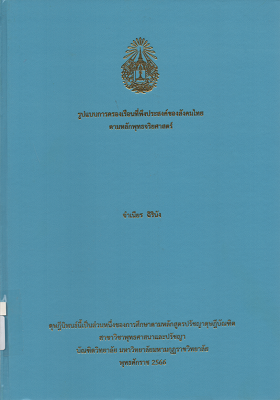
รูปแบบการครองเรือนที่พึงประสงค์ของสังคมไทยตามหลักพุทธจริยศาสตร์ = The Model of Desirable Household of Thai Society According to Buddhist Ethics
1 of 1 copy availableหอสมุดกลาง ชั้น 4 · ดฎ 306.8 จ356ร 2566
Copies in the library
| Location | Call number | Status |
|---|---|---|
| หอสมุดกลาง ชั้น 4 | ดฎ 306.8 จ356ร 2566 | Available |
About this title
- Title
- รูปแบบการครองเรือนที่พึงประสงค์ของสังคมไทยตามหลักพุทธจริยศาสตร์ = The Model of Desirable Household of Thai Society According to Buddhist Ethics
- Author
- จำเนียร ฉิรินัง
- Published
- นครปฐม : มหาวิทยาลัยมหามกุฏราชวิทยาลัย, 2566
- Language
- Thai
- Notes
- ดุษฎีนิพนธ์เรื่อง รูปแบบการครองเรือนที่พึงประสงค์ของสังคมไทยตามหลักพุทธจริยศาสตร์ มีวัตถุประสงค์เพื่อ 1) ศึกษาแนวคิดทฤษฎีเกี่ยวกับการครองเรือนที่พึงประสงค์ของสังคมไทย 2) ศึกษาหลักพุทธจริยศาสตร์ที่เกี่ยวกับการครองเรือน 3) สร้างรูปแบบการครองเรือนที่พึงประสงค์ของสังคมไทยตามหลักพุทธจริยศาสตร์ และ 4) เสนอองค์ความรู้เกี่ยวกับรูปแบบการครองเรือนที่พึงประสงค์ของสังคมไทยตามหลักพุทธจริยศาสตร์ เป็นการวิจัยเชิงคุณภาพ เครื่องมือที่ใช้ในการวิจัย ได้แก่ แบบสัมภาษณ์ กลุ่มเป้าหมาย จำนวน 20 รูป/คน คือ กลุ่มพระสงฆ์ 5 รูป กลุ่มนักวิชาการ 5 รูป/คน กลุ่มประชาชน 10 คน การวิเคราะห์ข้อมูลการวิเคราะห์เชิงพรรณนา ผลการวิจัยพบว่า: 1. แนวคิดทฤษฎีเกี่ยวกับการครองเรือนที่พึงประสงค์ของสังคมไทย: การครองเรือนที่คู่สมรสปรารถนาจะอยู่ร่วมกันด้วยความสมัครใจใช้ชีวิตแบบฆราวาสวิสัยมีธรรมะและความรักเป็นเครื่องปฏิบัติร่วมกัน 2. หลักพุทธจริยศาสตร์ที่เกี่ยวกับการครองเรือน: การครองเรือนที่พึงประสงค์ของสังคมไทยตามหลักพุทธจริยศาสตร์ถือปฏิบัติตามหลัก 1) ฆราวาสธรรม, 2) ศีล 5, 3) โยนิโสมนสิการ, 4) ทิฏฐธัมมิกัตถประโยชน์, และ 5) หลักทิศ 6 3. รูปแบบการครองเรือนที่พึงประสงค์ของสังคมไทยตามหลักพุทธจริยศาสตร์: รูปแบบการครองเรือนที่พึงประสงค์ของสังคมไทยตามหลักพุทธจริยศาสตร์ มี 5 รูปแบบ คือ 1) รูปแบบรักเดียวใจเดียว 2) รูปแบบการขจัดความขัดแย้งในครอบครัว 3) รูปแบบการครองเรือนที่พึงประสงค์ 4) รูปแบบทางด้านเศรษฐกิจในครอบครัว และ 5) รูปแบบความรับผิดชอบต่อการปฏิบัติหน้าที่สามี/ภรรยา 4. องค์ความรู้รูปแบบการครองเรือนที่พึงประสงค์ “FBDR AEW MODEL” 1) F = Family problems หมายถึง ปัญหาการครองเรือน 2) B = Buddhist ethics หมายถึง หลักพุทธจริยศาสตร์ที่นำมาใช้ในการครองเรือน 3) D = Desired style of living หมายถึง รูปแบบการครองเรือนที่พึงประสงค์ของสังคมไทย และ 4) R = Resulting in หมายถึง คู่สามีภรรยาได้ปฏิบัติตามหลักพุทธจริยศาสตร์ The objectives of this dissertation on the model of desirable household of Thai society according to Buddhist ethics were 1) to study the theoretical concepts regarding the desirable household of Thai society 2) to study the principles of Buddhist ethics regarding household ownership 3) to create a household style that was desirable for Thai society according to Buddhist ethics and 4) to present knowledge about a household style that was desirable for Thai society according to Buddhist ethics. It was a qualitative research. The research instruments were an interview form with a target group of 20 persons, namely 5 monks, 5 academics, and 10 people. Data analysis was descriptive analysis. The results of the research found that: 1. The theoretical concepts regarding the desirable household of Thai society: A household in which married couples desired to live together voluntarily, living a Buddhism’s virtues of a good household life (Gharavasadhamma) and love as common practices. 2. Principles of Buddhist ethics regarding household: the desirable household of Thai society according to the principles of Buddhist ethics were 1) Gharavasadhamma 2) The 5 Precepts, 3) Emotional style, 4) Ditthadhammikattha (The Virtues of conductive to benefit), and 5) The Six Direction Principles. 3. The Model of desirable household of Thai society according to the principles of Buddhist ethics: There were 5 models of desirable household of Thai society according to the principles of Buddhist ethics: 1) The Model of One-hearted love, 2) The Model of resolving conflict in the family, 3) The Model of Desired style of living, 4) The Model of family economic, and 5) The Model of Failure to perform duties as husband/wife. 4. New knowledge regarding the desirable of household style of Thai society according to Buddhist ethics was the “FBDR AEW MODEL”: 1) F = Family problems referred to couple that resulted in an unwanted family, 2) B = Buddhist ethics referred to the principles of Buddhist ethical used in a household in order to create a household that was desired by Thai society, 3) D = Desired form of household in Thai society, and 4) R = Resulting in referred to a married couple who practiced the principles of Buddhist ethics, which would result in a happy family, a happy society, and leading to the