Book · 2567
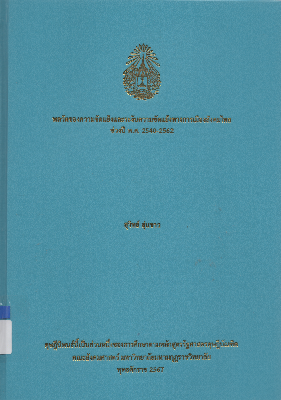
พลวัตของความขัดแย้งและระงับความขัดแย้งทางการเมืองสังคมไทยช่วงปี พ.ศ. 2540-2562 = Dynamics and Suppression of Political conflicts in Thai society During 1997-2019
1 of 1 copy availableหอสมุดกลาง ชั้น 4 · ดฎ 303.6 ส881พ 2567
Copies in the library
| Location | Call number | Status |
|---|---|---|
| หอสมุดกลาง ชั้น 4 | ดฎ 303.6 ส881พ 2567 | Available |
About this title
- Title
- พลวัตของความขัดแย้งและระงับความขัดแย้งทางการเมืองสังคมไทยช่วงปี พ.ศ. 2540-2562 = Dynamics and Suppression of Political conflicts in Thai society During 1997-2019
- Author
- สุวิทย์ อุ่นขาว
- Published
- นครปฐม : มหาวิทยาลัยมหามกุฏราชวิทยาลัย, 2567
- Language
- Thai
- Notes
- การวิจัยในครั้งนี้เป็นการวิจัยเชิงคุณภาพ โดยมีวัตถุประสงค์เพื่อ 1) วิเคราะห์พลวัตของความขัดแย้งทางการเมืองสังคมไทย ช่วงปี พ.ศ. 2540-2556 2) เพื่อสังเคราะห์พลวัตของความขัดแย้งและระงับความขัดแย้งทางการเมืองสังคมไทย ช่วงปี พ.ศ. 2557-2562 3) เพื่อนำเสนอรูปแบบการแก้ไขปัญหาพลวัตของความขัดแย้งและผลกระทบของความขัดแย้งทางการเมืองสังคมไทย สู่ความยั่งยืนโดยใช้แบบสัมภาษณ์กึ่งโครงสร้าง และสัมภาษณ์เชิงลึก จากผู้ให้มูลหลัก จำนวน 25 คน วิเคราะห์ข้อมูลในบริบทที่เกี่ยวข้องเป็นสิ่งสำคัญ เพื่อให้เข้าใจข้อมูลในเชิงลึก และสามารถสรุปได้ว่าข้อมูลที่ได้มีความหมายอย่างไรในบริบทที่ศึกษา และนำเสนอผลการวิจัยเชิงพรรณณาวิธี ผลการวิจัยพบว่า : 1. พลวัตความขัดแย้งทางการเมืองสังคมไทยช่วงปี พ.ศ. 2540-2556 เกิดจากการเปลี่ยนแปลงโครงสร้างและวัฒนธรรมทางการเมืองที่มาจากรัฐธรรมนูญสองฉบับ รัฐธรรมนูญแห่งราชอาณาจักรไทย พ.ศ. 2540 และ พ.ศ. 2550 ก่อให้เกิดกลุ่มคนเสื้อเหลือง และเสื้อแดง 2. ความขัดแย้งทางการเมืองสังคมไทย ช่วงปี พ.ศ. 2557-2562 เกิดการรัฐประหารในปี พ.ศ. 2557 ทำให้สิทธิและเสรีภาพของประชาชนลดลงในระหว่าง 5 ปีของการบริหารงานของคณะรักษาความสงบแห่งชาติ (คสช.) และเลือกตั้งสมาชิกสภาผู้แทนราษฎรไทยในปี พ.ศ. 2562 ถูกมองว่าไม่เป็นธรรมโดยประชาชนมองว่าเป็นการสืบทอดอำนาจของรัฐบาลทหาร 3. รูปแบบการแก้ไขปัญหาความขัดแย้งทางการเมืองในสังคมไทย พบว่า 1.สร้างการอภิปราย และการเสวนาที่เปิดกว้าง 2. ส่งเสริมการเรียนรู้และเข้าใจเรื่องการแก้ไขปัญหาความขัดแย้งทางการเมือง 3. สร้างพื้นที่นำเสนอข้อมูลเชิงวิชาการ 4. สนับสนุนการวิจัยและการศึกษาเกี่ยวกับปัญหาความขัดแย้งทางการเมืองในสังคมไทย 5. สร้างแพลตฟอร์มหรือแอปพลิเคชันที่เป็นที่รวมข้อมูล แนวทางการแก้ไขปัญหาความขัดแย้งทางการเมืองในสังคมไทย 6. สนับสนุนการสร้างสื่อสารที่เปิดเผยและโปร่งใส 7. ให้ความรู้และฝึกอบรมการแก้ไขปัญหาความขัดแย้งทางการเมือง 8. สร้างแนวทางและกรอบคำแนะนำในการแก้ไขปัญหาความขัดแย้ง และ 9. ส่งเสริมและสนับสนุนการเปิดโอกาสในการสนทนาและการตัดสินใจเกี่ยวกับปัญหาความขัดแย้งทางการเมืองในสังคมไทย Qualitative Research on the Dynamics of Political and Social Conflicts in Thailand: Findings and Proposed Solutions This research adopts a qualitative approach with three main objectives: (1) to analyze the dynamics of political and social conflicts in Thailand during 1997–2013; (2) to synthesize the dynamics and resolution of these conflicts during 2014–2019; and (3) to propose a sustainable model for addressing the dynamics and impacts of political and social conflicts in Thailand. The research methodology involved semi-structured and in-depth interviews with 25 key informants. Emphasis was placed on analyzing data within relevant contexts to achieve a deep understanding of the issues and derive meaningful insights. The findings are presented descriptively to highlight the complexity and nuances of the conflicts. Research Results : 1. Dynamics of Political and Social Conflicts (1997–2013) During this period, the conflicts were primarily driven by changes in the political structure and culture, influenced by the promulgation of two constitutions: the Constitution of the Kingdom of Thailand in 1997 and in 2007. These structural shifts gave rise to two opposing political movements: the Yellow Shirt and the Red Shirt groups. The formation of these groups reflected deeper societal divisions and ideological differences, which significantly shaped the nature of political conflicts in Thailand. 2. Political and Social Conflicts (2014–2019) The military coup of 2014 marked a turning point in Thai politics, leading to a reduction in citizens’ rights and freedoms under the five-year administration of the National Council for Peace and Order (NCPO). The 2019 general election, conducted after this period, was widely perceived as unjust by the public, who viewed it as a mechanism for the military government to retain power. These events intensified public dissatisfaction and contributed to ongoing political tensions. 3. Proposed Model for Resolving Political Conflicts The study identified nine strategies for resolving political and social conflicts sustainably: 1. Foster open discussions and dialogues to encourage diverse viewpoints. 2. Promote learning