หนังสือ · 2565
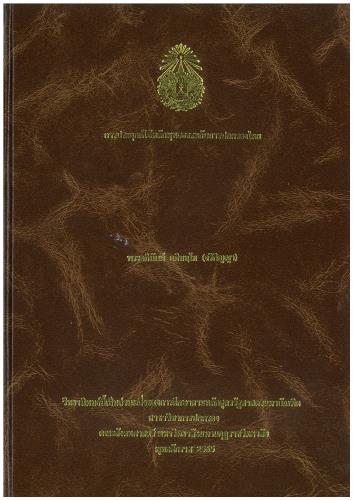
การประยุกต์ใช้หลักพุทธธรรมกับการปกครองไทย = Application of Buddhadhamma with the Thai Government
พระอภินันท์ อภินนฺโท (จริภิญญา)
ว่าง 1 จาก 1 เล่มหอสมุดกลาง · วท 294.30132 อ257ก 2565
ตัวเล่มในห้องสมุด
| สถานที่ | เลขเรียก | สถานะ |
|---|---|---|
| หอสมุดกลาง | วท 294.30132 อ257ก 2565 | ว่าง |
รายละเอียด
- ชื่อเรื่อง
- การประยุกต์ใช้หลักพุทธธรรมกับการปกครองไทย = Application of Buddhadhamma with the Thai Government
- ผู้แต่ง
- พระอภินันท์ อภินนฺโท (จริภิญญา)
- พิมพ์ที่
- นครปฐม : มหาวิทยาลัยมหามกุฏราชวิทยาลัย, 2565
- ภาษา
- ไทย
- หมายเหตุ
- การวิจัยครั้งนี้มีวัตถุประสงค์ ดังนี้ 1) เพื่อศึกษาการปกครองไทย 2) เพื่อศึกษาหลักพุทธธรรมที่ใช้ในการปกครอง 3) เพื่อการประยุกต์ใช้หลักพุทธธรรมกับการปกครองไทย งานวิจัยฉบับนี้ เป็นการวิจัยเชิงคุณภาพ ซึ่งเน้นการวิจัยทางเอกสาร โดยศึกษาจากพระไตรปิฎก และเอกสารที่เกี่ยวข้องกับการปกครอง วิเคราะห์ข้อมูลโดยการวิเคราะห์เนื้อหาประกอบบริบทแล้วนำเสนอในลักษณะพรรณนาความ ผลการวิจัยพบว่า 1) การปกครองของไทยตั้งแต่ยุครัตนโกสินทร์จนถึงปัจจุบันถูกแบ่งเป็น 3 ช่วงด้วยกัน กล่าวคือ 1. การปกครองในยุครัตนโกสินทร์ตอนต้นที่ใช้ระบอบการปกครองแบบสมบูรณาญาสิทธิราชย์ที่มีลักษณะการปกครองเหมือนการปกครองในยุคอยุธยาตอนปลาย 2. ปกครองในยุครัตนโกสินทร์ตอนกลางเป็นการเปลี่ยนแปลงครั้งสำคัญในระบอบบริหารราชการ และได้นำวิทยาศาสตร์ความรู้ในด้านการปกครองและด้านต่าง ๆ นำมาใช้พัฒนาประเทศ 3. การปกครองในยุคประชาธิปไตยอันมีพระมหากษัตริย์เป็นประมุข ตั้งแต่ พ.ศ. 2475 เป็นต้นมาจนถึงปัจจุบัน โดยศึกษาการเปลี่ยนแปลง และปัญหาหลัก ๆ ในแต่ละยุคสมัย 2) หลักพุทธธรรมทางพระพุทธศาสนาที่เกี่ยวข้องกับการปกครองไทย หลักธรรมทางพระพุทธศาสนาที่เกี่ยวข้องกับการปกครองไทย คือ 1. หลักทศพิธราชธรรม ที่ว่าด้วยหลักแห่งการพัฒนาคนผู้ปกครองและผู้ถูกปกครอง 2. สัปปุริสธรรม เป็นหลักธรรมที่ว่าด้วยการพัฒนาบ้านเมืองมุ่งเน้นที่ความเข้าใจและการส่งเสริมบุคคลให้มีประสิทธิภาพโดยเริ่มต้นจากผู้นำ 3. อปริหานิยธรรม เป็นหลักธรรมที่ว่าด้วยการพัฒนาการปกครองในระบอบประชาธิปไตย ทำความเข้าใจกันพูดคุยและให้เกียรติในสิทธิของคน 4. สังคหวัตถุธรรม เป็นหลักธรรมที่ว่าด้วยการสร้างความสามัคคีให้แก่กัน 3) การประยุกต์ใช้หลักพุทธธรรมในการปกครองของไทย การปกครองในรัตนโกสินทร์ทั้ง 3 ยุค โดยพบปัญหา 4 ด้าน คือ 1.ปัญหาความไม่มีเสถียรภาพในระบอบการปกครอง 2. ปัญหาพัฒนาการกระจายอำนาจ 3. ปัญหาการพัฒนาของระบอบประชาธิปไตย และ4. ปัญหาการขาดความสามัคคีของประชาชนโดยยึดหลักธรรมทั้ง 4 ข้อดังต่อไปนี้ 1. หลักทศพิธราชธรรม 2. สัปปุริสธรรม 3. อปริหานิยธรรม 4. สังคหวัตถุธรรม เพื่อนำมาประยุกต์ใช้ในการแก้ปัญหาในแต่ละด้าน เพื่อให้เกิดการพัฒนาและความสามัคคีในการปกครองไทย The objectives of this research were as follows: 1) to study Thai governance, 2) to study Buddhist principles used in governance, and 3) to apply Buddhist principles to Thai governance. This research is a qualitative research which focuses on document research by studying the Tipitaka and documents related to the governance. The data were analyzed by content analysis and presented in a descriptive manner. The results of the research were found that: 1) Thai governance from the Rattanakosin era to present is divided into 3 periods, namely: 1. The governance in the early Rattanakosin period that used an absolute monarchy regime and looked like the governance in the late Ayutthaya period. 2. The rule in the central Rattanakosin period had a major change in the bureaucratic regime and had brought science and knowledge in governance and various fields to develop the country. 3. Governance in the democratic era with the King was as Head of State since 1932 onwards by studying the changes and main problems in each period. 2) Buddhist principles related to Thai governance are: 1. Rajadhamma; the principles for development of people who are ruled and the rulers, 2. Sappurisadhamma; the principles of development of the country to be prosperous with the emphasis on understanding and effectiveness of people, starting with the leaders, 3. Aparihaniyadhamma; the principles for development of the country to be prosperous with the emphasis on understanding and empowering people to be effective, starting with the leaders, and 4. Raja-sangahavatthu; the principles for building unity. 3) The problems found from application of Buddhist principles in Thai governance in Rattanakosin period in 4 areas are as follows: 1. Instability in the regime, 2. Decentralization of power, 3. Democratic system development, and 4. Lack of unity of the people. These problems cam be solved by application of the following Dhamma principles: 1. Rajadhamma, 2. Sappurisadhamma, 3.Aparihaniya dhamma, and 4. Raja-sangahavatthu.