
หนังสือ · 2566
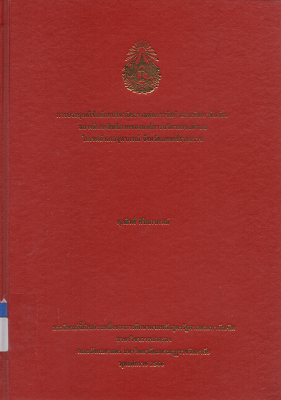
การประยุกต์ใช้หลักอปริหานิยธรรมต่อการจัดทำแผนพัฒนาท้องถิ่นอย่างมีประสิทธิภาพขององค์การบริหารส่วนตำบลในเขตอำเภอจุฬาภรณ์ จังหวัดนครศรีธรรมราช = An Application of Aparihaniyadhamma Principle to Effective Local Development Plan Making of Sub-District Administrative Organization in Chulaphorn District, Nakhon Si Thammarat Province
ว่าง 2 จาก 2 เล่มวิทยาเขตศรีธรรมโศกราช · สร 307.12 ศ735ก 2566
ตัวเล่มในห้องสมุด
| สถานที่ | เลขเรียก | สถานะ |
|---|---|---|
| วิทยาเขตศรีธรรมโศกราช | สร 307.12 ศ735ก 2566 | ว่าง |
| หอสมุดกลาง ชั้น 4 | สร 307.12 ศ735ก 2566 | ว่าง |
รายละเอียด
- ชื่อเรื่อง
- การประยุกต์ใช้หลักอปริหานิยธรรมต่อการจัดทำแผนพัฒนาท้องถิ่นอย่างมีประสิทธิภาพขององค์การบริหารส่วนตำบลในเขตอำเภอจุฬาภรณ์ จังหวัดนครศรีธรรมราช = An Application of Aparihaniyadhamma Principle to Effective Local Development Plan Making of Sub-District Administrative Organization in Chulaphorn District, Nakhon Si Thammarat Province
- ผู้แต่ง
- ศุภสิทธิ์ ศิริสภาภรณ์
- พิมพ์ที่
- นครปฐม : มหาวิทยาลัยมหามกุฏราชวิทยาลัย, 2566
- ภาษา
- ไทย
- หมายเหตุ
- ฉบับอัดสำเนา, สารนิพนธ์ (ร.ม) การปกครอง สารนิพนธ์นี้มีวัตถุประสงค์เพื่อศึกษา 1) การประยุกต์ใช้หลักอปริหานิยธรรมต่อการจัดทำแผนพัฒนาท้องถิ่นอย่างมีประสิทธิภาพ และ 2) แนวทางการประยุกต์ใช้หลักอปริหานิยธรรมต่อการจัดทำแผนพัฒนาท้องถิ่นอย่างมีประสิทธิภาพขององค์การบริหารส่วนตำบลในเขตอำเภอจุฬาภรณ์ จังหวัดนครศรีธรรมราช กลุ่มตัวอย่าง จำนวน 144 คน กำหนดกลุ่มตัวอย่างด้วยตารางสำเร็จรูปของเครจซี่และมอร์แกน ผู้ให้ข้อมูลสำคัญ จำนวน 9 คนโดยเลือกแบบเจาะจง เครื่องมือที่ใช้ในการวิจัยคือแบบสอบถาม และแบบสัมภาษณ์ สถิติที่ใช้ ได้แก่ ความถี่ ร้อยละ ค่าเฉลี่ย ส่วนเบี่ยงเบนมาตรฐาน และการวิเคราะห์เนื้อหาเชิงพรรณนา ผลการวิจัยพบว่า 1. การประยุกต์ใช้หลักอปริหานิยธรรมต่อการจัดทำแผนพัฒนาท้องถิ่นอย่างมีประสิทธิภาพขององค์การบริหารส่วนตำบลในเขตอำเภอจุฬาภรณ์ จังหวัดนครศรีธรรมราช โดยรวมอยู่ในระดับมากที่สุด (x ̅ = 4.53, S.D. = 0.52) และทุกด้านอยู่ในระดับมากที่สุด ด้านที่มีค่าเฉลี่ยสูงสุด คือ การสักการะ เคารพ นับถือ บูชาและปกป้องรักษาปูชนียสถาน (x ̅ = 4.56, S.D. = 0.51) และด้านที่มีค่าเฉลี่ยต่ำสุดคือ การประชุมหารืออย่างต่อเนื่อง (x ̅ = 4.50, S.D. = 0.52) 2. แนวทางการประยุกต์ใช้หลักอปริหานิยธรรมต่อการจัดทำแผนพัฒนาท้องถิ่น มีดังนี้ 1) ควรมีการประชุมรับฟังข้อคิดเห็นจากทุกภาคส่วน 2) ทุกฝ่ายต้องประชุมอย่างพร้อมเพรียง 3) ต้องยึดถือและปฏิบัติตามหลักการอย่างจริงจัง 4) เน้นการมีส่วนร่วมเพื่อการพัฒนาท้องถิ่น 5) การให้เกียรติซึ่งกันและกันของสมาชิกในองค์กร 6) ส่งเสริมการให้เกียรติต่อสถานที่ที่เป็นที่ยึดเหนี่ยวจิตใจของคนในชุมชน และ 7) สนับสนุนและเสริมสร้างบุคลากรให้มีคุณธรรมและมีภาวะผู้นำ The purposes of this research article is to study 1) the application of the Aparihaniyadhamma principles in the preparation of effective local development plans, and 2) guidelines for the application of the Aparihaniyadhamma principles in the efficient local development plans of sub-District administrative organizations in Chulaphorn district, Nakhon Si Thammarat province. The sample group consisted of 144 personnel of the sub-district administrative organization. Nine of key informants were selected by purposive sampling. The employed research instruments were a questionnaire and an interview form. The statistics employed for the data analysis were frequency, percentage, standard deviation, and descriptive content analysis. The findings were as follows 1. The overall of the application of the Aparihaniyadhamma principles for making the local development plans of sub-district administrative organizations in Chulaphorn district, Nakhon Si Thammarat province was at the highest level (x ̅ = 4.53, S.D. = 0.52). All of aspect was at the highest level, which the worship, respect, worship, and protect sacred places was the highest average (x ̅ = 4.56, S.D. = 0.51), whereas, the preparedness aspect of the meeting was the lowest average (x ̅ = 4.50, S.D. = 0.52) 2. Guidelines for applying the Aparihaniyadhamma principles for making the local development plans were as follows: 1) There should be listen to opinions from all sectors 2) Everyone should attend the meeting 3) There must strictly adhere to and comply with principles and rules 4) Emphasize the participation of all parties 5) There should be mutual respect among members 6) There should promote and support the respect of places that hold the minds of the people in the community and 7) There should support and strengthen personnel from all sectors to have morality and leadership.