
หนังสือ · 2567
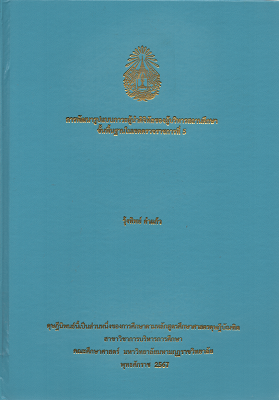
การพัฒนารูปแบบภาวะผู้นำดิจิทัลของผู้บริหารสถานศึกษาขั้นพื้นฐานในเขตตรวจราชการที่ 5 = The Development Model of Digital Leadership for School Administrators under the Office of the Basic Education Commission in the Inspection Region No.5
ว่าง 1 จาก 1 เล่มหอสมุดกลาง ชั้น 4 · ดฎ 371.201 ร622ก 2567
ตัวเล่มในห้องสมุด
| สถานที่ | เลขเรียก | สถานะ |
|---|---|---|
| หอสมุดกลาง ชั้น 4 | ดฎ 371.201 ร622ก 2567 | ว่าง |
รายละเอียด
- ชื่อเรื่อง
- การพัฒนารูปแบบภาวะผู้นำดิจิทัลของผู้บริหารสถานศึกษาขั้นพื้นฐานในเขตตรวจราชการที่ 5 = The Development Model of Digital Leadership for School Administrators under the Office of the Basic Education Commission in the Inspection Region No.5
- ผู้แต่ง
- รุ้งทิพย์ คำแก้ว
- พิมพ์ที่
- นครปฐม : มหาวิทยาลัยมหามกุฏราชวิทยาลัย, 2567
- ภาษา
- ไทย
- หมายเหตุ
- การศึกษาครั้งนี้มีวัตถุประสงค์ 1) เพื่อศึกษาองค์ประกอบภาวะผู้นำดิจิทัลของผู้บริหารสถานศึกษาขั้นพื้นฐานในเขตตรวจราชการที่ 5 2) เพื่อสร้างรูปแบบการพัฒนาภาวะผู้นำดิจิทัลของผู้บริหารสถานศึกษาขั้นพื้นฐานในเขตตรวจราชการที่ 5 และ 3) เพื่อประเมินรูปแบบการพัฒนาภาวะผู้นำดิจิทัลของผู้บริหารสถานศึกษาขั้นพื้นฐานในเขตตรวจราชการที่ 5 โดยใช้วิธีการวิจัยแบบผสมผสาน (Mixed Methods Research) กลุ่มประชากรที่ใช้ในการวิจัย คือ ผู้บริหารสถานศึกษาขั้นพื้นฐานในเขตตรวจราชการที่ 5 จำนวน 2,154 คน ผู้ให้ข้อมูลคือผู้บริหารสถานศึกษา กลุ่มตัวอย่างผู้ให้ข้อมูลทั้งสิ้น 360 คน เครื่องมือที่ใช้ในการวิจัยประกอบด้วย 1) แบบสอบถาม มีค่าความเชื่อมั่น เท่ากับ .969 2) แบบสัมภาษณ์กึ่งโครงสร้าง และ 3) แบบประเมิน สถิติที่ใช้ในการวิเคราะห์ข้อมูล ได้แก่ ค่าความถี่ ค่าร้อยละ ค่าเฉลี่ย ส่วนเบี่ยงเบนมาตรฐาน และการวิเคราะห์องค์ประกอบเชิงยืนยัน (Confirmatory Factor Analysis : CFA) โดยใช้โปรแกรมคอมพิวเตอร์สำเร็จรูปทางสถิติ ผลการวิจัยพบว่า 1. องค์ประกอบภาวะผู้นำดิจิทัลของผู้บริหารสถานศึกษาขั้นพื้นฐานในเขตตรวจราชการที่ 5 ประกอบด้วย 5 องค์ประกอบหลัก ได้แก่ การสร้างวิสัยทัศน์ดิจิทัล มี 3 องค์ประกอบย่อย การรู้ดิจิทัล มี 4 องค์ประกอบย่อย ความสามารถในการใช้เทคโนโลยีดิจิทัล มี 3 องค์ประกอบย่อย การสร้างวัฒนธรรมการเรียนรู้ดิจิทัล มี 4 องค์ประกอบย่อย และการมีจริยธรรมในการใช้เทคโนโลยีดิจิทัล มี 3 องค์ประกอบย่อย 2. รูปแบบภาวะผู้นำดิจิทัลของผู้บริหารสถานศึกษาขั้นพื้นฐานในเขตตรวจราชการที่ 5 ประกอบด้วย หลักการ วัตถุประสงค์ เนื้อหา กระบวนการ การวัดและการประเมินผล คำอธิบาย เงื่อนไขความสำเร็จ และผลที่คาดว่าจะได้รับ 3. ผลการประเมินและรับรองรูปแบบภาวะผู้นำดิจิทัลของผู้บริหารสถานศึกษาขั้นพื้นฐานในเขตตรวจราชการที่ 5 ในด้านความถูกต้อง ความเหมาะสม ความเป็นไปได้ และความเป็นประโยชน์ ซึ่งผ่านเกณฑ์การประเมินตามที่กำหนดไว้ จึงสรุปได้ว่าผู้เชี่ยวชาญและผู้ทรงคุณวุฒิรับรองรูปแบบที่พัฒนาขึ้น The objectives of this study were 1) to study the elements of digital leadership of basic education administrators in Inspectorate Region 5, 2) to create a model for the development of digital leadership of basic education administrators in Inspectorate Region 5, and 3) to evaluate the digital leadership development model of basic education administrators in Inspectorate Region 5 using a mixed methods research method. The tools used in the research included 1) a questionnaire with a confidence value of .969, 2) a semi-structured interview, and 3) Statistical evaluation form used in data analysis including frequency, percentage, mean, standard deviation, and confirmatory factor analysis (CFA) using statistical ready-made computer program. The results showed that: 1. The digital leadership elements of basic education administrators in the 5th Inspectorate Region consist of 5 main components: creating a digital vision with 3 sub-components, digital literacy with 4 sub-components, digital technology use ability with 3 sub-components, creating a digital learning culture with 4 sub-components, and ethics in using digital technology with 3 sub-components. 2. The digital leadership model of basic education administrators in the 5th Inspectorate Region consists of the following: Principles, Objectives, Content, Process, Measurement and Evaluation Description, conditions for success and expected results. 3. The results of the evaluation and certification of the digital leadership model of basic education administrators in the 5th Inspectorate Region in terms of accuracy, appropriateness, It meets the evaluation criteria as prescribed. Therefore, it can be concluded that experts and experts have endorsed the developed model.